

Updated March 16, 2026.
Each spring and summer, tiny litters of kittens begin appearing throughout our communities in what animal welfare organizations call “kitten season.” These kittens can be only days or weeks old and may look incredibly vulnerable when you first discover them.
Your instinct may be to scoop them up and bring them inside, but the best way to help is to pause, assess the situation, and take the right steps.
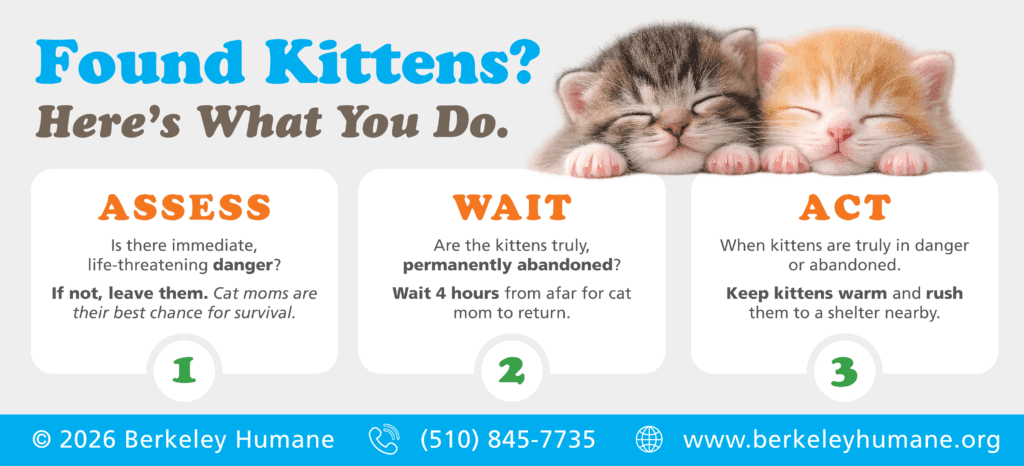
Assess the Situation
Start by calmly looking around the area. Are the kittens in immediate danger from traffic, extreme weather, or other threats?
If not, the best thing you can do is leave them where they are. In most cases, the mother cat is nearby searching for food and will return to nurse her kittens. Their mother gives them the greatest chance of survival.
Wait and Watch
If possible, observe the kittens from a distance. Avoid standing close by, as this can discourage the mother from returning.
Wait at least four hours to see if the mother cat comes back. Kittens are rarely abandoned; their mom is often just temporarily away finding food.
Act if Necessary
If you have waited and determined that the kittens have truly been abandoned or if they are in a dangerous location, then it may be time to step in.
Place the kittens in a box and keep them warm with a towel or blanket. Then contact Berkeley Humane at (510) 845-7735 or contact us online so we can help assess the situation and guide next steps. Your local animal shelter may also be able to help.
If the kittens are with their mother but the location is unsafe, do your best to safely gather both the kittens and their mother together. Keeping the family together allows the mother to continue caring for them until they are old enough to be weaned and ensures she can later be spayed, preventing future litters.
Community Support Matters
If you are not comfortable handling the situation yourself, there are many Trap-Neuter-Return (TNR) programs and volunteers throughout the Bay Area who can help. TNR programs humanely trap community cats, spay or neuter them, and return them to their environment, an important step in reducing the number of kittens born outdoors.
Did you know a mother cat can become pregnant again just 8–10 weeks after giving birth? Spaying is one of the most effective ways to reduce kitten overpopulation.
When in Doubt, Ask for Help
Keeping animals safe is Berkeley Humane’s top priority. This guide offers basic steps for helping kittens in your neighborhood, but local animal control agencies may have specific recommendations for your area.
If you find kittens and aren’t sure what to do, reach out. We’re here to help.
Together, our community can ensure every kitten gets the safest and healthiest start possible.